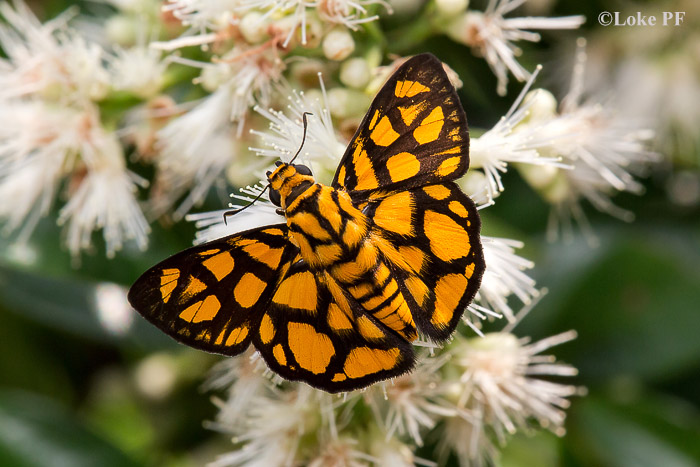
Featuring : Lower Peirce Reservoir Park

A timber boardwalk winds around the reservoir edge at the Lower Peirce Reservoir Park
This weekend's feature location for butterfly photography is adjacent to the second oldest reservoir in Singapore. (The oldest reservoir being the nearby MacRitchie Reservoir) It was originally known as the Kallang River Reservoir, and it was formed by impounding across the lower reaches of the Kallang River in 1910.

In 1922, it was renamed Peirce Reservoir in commendation of the services of Robert Peirce (engineer), who was the PWD engineer of Singapore from 1901 to 1916. In 1975, a dam was built across the upper reaches of the Peirce Reservoir, splitting it into Upper and Lower Peirce Reservoirs thereafter.

In 1922, it was renamed Peirce Reservoir in commendation of the services of Robert Peirce (engineer), who was the PWD engineer of Singapore from 1901 to 1916. In 1975, a dam was built across the upper reaches of the Peirce Reservoir, splitting it into Upper and Lower Peirce Reservoirs thereafter.

Mature secondary forest lines the banks of Lower Peirce Reservoir Park
The forested areas that line the banks of Lower Peirce Reservoir Park (LPR) is considered a mature secondary rainforest. One can still find rubber trees and oil palms in the area - reminders of a past when vast areas of Singapore were covered with cash crops and plantations. The Lower Peirce Reservoir Park is part of the 3,403 Ha Central Catchment Nature Reserve (CCNR). It forms the eastern boundary of the CCNR and is connected to the Bishan-Ang Mo Kio park. Lower Peirce Reservoir Park sits on about 6 Hectares of land covered with thick lush secondary forest.

Within LPR, a nature boardwalk meanders through one of Singapore's last remaining mature secondary forest and along the edge of Lower Peirce Reservoir. The 900m boardwalk takes the visitor along the water's edge and then through a well-shaded secondary forest which is home to an amazing diversity of flora and fauna. The boardwalk is of adequate width and is robustly constructed to withstand the ever-humid conditions under the forest canopy. I recall that this was one of the first forest boardwalks constructed by NParks and the environmentally-sensitive construction process was managed such that no mechanical equipment was allowed in the forest. Hence the construction work was done solely by manual labour.


The main road to the reservoir is lined with butterfly-attracting plants like Bandicoot Berry and Red Tree Shrub

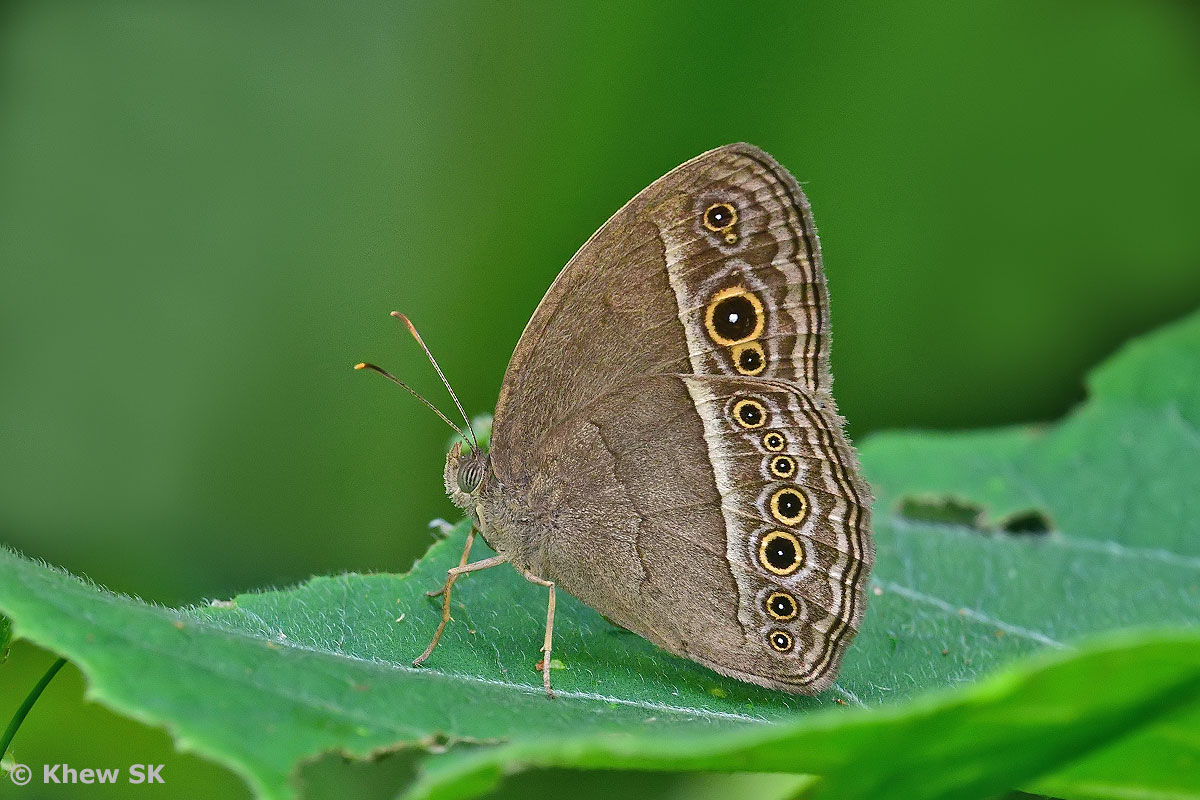

Some common butterflies found at the open areas at Lower Peirce Reservoir Park
The main entrance to Lower Peirce Reservoir Park is via a small carpark towards the south-east of the park. Parking is free but lots are limited. Visitors walk along a paved road that is lined with native plants like Bandicoot Berry and Red Tree Shrub. As you reach the reservoir edge, you can take in the scenic view of the Lower Peirce Reservoir and the golf course beyond. Nearby, there are trellises covered with Bauhinia and there are Ixora shrubs along the paths. Look out for the Grass Yellows, Cycad Blue, Bush Browns, Grass Blues and Sailors around this area.

Note that recreational fishing is permitted along a short stretch along the edge of the reservoir, so do not be alarmed if you see what appears to be 'poachers' within a nature reserve! There are shelters and pavilions nearby to take cover if you are caught in our tropical thunderstorm. Once past this open area, you will be able to see the start of the nature boardwalk. This boardwalk will lead you towards the first section which skirts around the forest edge and bring you just next to the water of the reservoir.


Views towards the reservoir. Recreational fishing is permitted here


The start of the boardwalk accessed from the Lower Peirce Reservoir carpark
Along the boardwalk, you will be able to spot lush bushes of the Straits (or Singapore) Rhododendron (Melastoma malabathricum). This ripened fruits of this plant is attractive to many species of butterflies, but you will have to wait till the fruiting season before you can enjoy watching the variety of butterflies that visit the sugary fruits. The Straits Rhododendron is also the caterpillar host plant of the Horsfield's Baron (Tanaecia iapis puseda) and if you are lucky, you will encounter the female of this species ovipositing on the host plant.


A female Horsfield's Baron preparing to lay her eggs on the Straits Rhododendron which grows beside the boardwalks around the water's edge.
Note that there are no barriers along this boardwalk, so please take care not to fall off the edge and into the water! Once you get past this stretch, the boardwalk will lead you into the heavily-shaded forested area of the park. There are adequate signages along the boardwalk with nature-friendly names like Casuarina Entrance, Jacaranda Entrance, Costus Trail, Hevea Trail and Oncospermum Trail, which are aptly named after some of the plants that can be found along the boardwalk trail.


The rare Yellow Archduke (Lexias canescens pardalina). Its caterpillar is often encountered at the Lower Peirce Reservoir boardwalk trail
At the intersection between the Bamboo Trail and Oncospermum Trail, keep your eyes peeled for the Buffy Fish Owl, which has attracted many bird photographers to this location. Coincidentally, this is also the area where the caterpillar of the rare Yellow Archduke has been photographed a number of times. Do look out for the elusive adult butterfly.


In the heavily-shaded forest through which the boardwalk winds, look out for the shade-loving species like the Archduke and Common Faun
Taking the route towards the Costus Trail will bring you to the end of the boardwalk at the Jacaranda Entrance. The heavily shaded forest understorey will not be generally attractive to the sun-loving butterfly species. However, look out for the forest dwellers like the Archduke, Malay Viscount and Common Faun, particularly in the vicinity of their respective caterpillar host plants.


NParks has designed rest areas for tired hikers or visitors who prefer to sit quietly and observe the amazing diversity of flora and fauna at Lower Peirce Reservoir Park
Moving along Bamboo Trail towards Hevea Trail will send you towards the Casuarina Entrance where the trail ends. Beyond this entrance and to the north is the famous Casuarina Road Prata shop which is a must-visit lunch pit stop after a long tiring walk. Note that the boardwalk trail is not flat and there are some elevation changes that will require you to walk up and down short flights of steps.


More uncommon forest species like the Saturn and Dark Blue Jungle Glory can be found here
Again, under the heavily-shaded forest canopy, you will expect to encounter only the shade loving butterfly species. It was amongst the leaf litter in the undergrowth that I spotted my first Dark Blue Jungle Glory in Singapore many years ago. Given that there are many different species of palms and rattans along the forest stream just off the boardwalk, see if you can spot the seasonal Saturn amongst the undergrowth.


And then there are some surprises amongst the Lycaenidae and Hesperiidae that will appear from time to time. If you are lucky, you may be able to encounter some of them. Some years back, I came across this pristine Fluffy Tit (Zeltus amasa maximinianus) feeding on some moss on a leaf. The occasional Arhopala and Jamides may flutter by, and when in season, you should be able to spot a couple of Branded Imperial (Eooxylides tharis distanti) around.


As you exit the boardwalk trail, do look out for the flowering bushes of the Bandicoot Berry and Buas Buas along Old Upper Thomson Road. These will usually attract the common butterflies like the Malayan Five Ring, Chestnut Bob, Chocolate Pansy and an occasional rarity that is waiting to surprise you.

The Lower Peirce Reservoir Park cannot be described as a 'butterfly haven', but the shaded habitat can spring the occasional surprise and delight you - particularly amongst the forest-loving species. Do look out for overripe figs and other forest fruits on the ground when in season, for butterflies are attracted to the sugary diets on the forest floor.

How to Get There :
By Bus:
Bus nos. 163, 167, 169, 855, 980.
Alight at the bus stop nearest to the Sembawang Hill Food Court and walk along Old Upper Thomson Road towards Lower Peirce Reservoir Park. The entrance to the trail (Casuarina Entrance) is about five minutes away.
By Car : Follow the direction of Upper Thomson Road. Turn left before the traffic lights at the junction of Ang Mo Kio Avenue 1 into Old Upper Thomson Road. Follow
the road until you see the entrance of the trail. Parking facilities are available along the road near the Casuarina Entrance (Paid parking). Alternatively park at the Lower Peirce Reservoir Carpark towards the south. (Free Parking)

Note that recreational fishing is permitted along a short stretch along the edge of the reservoir, so do not be alarmed if you see what appears to be 'poachers' within a nature reserve! There are shelters and pavilions nearby to take cover if you are caught in our tropical thunderstorm. Once past this open area, you will be able to see the start of the nature boardwalk. This boardwalk will lead you towards the first section which skirts around the forest edge and bring you just next to the water of the reservoir.


Views towards the reservoir. Recreational fishing is permitted here


The start of the boardwalk accessed from the Lower Peirce Reservoir carpark
Along the boardwalk, you will be able to spot lush bushes of the Straits (or Singapore) Rhododendron (Melastoma malabathricum). This ripened fruits of this plant is attractive to many species of butterflies, but you will have to wait till the fruiting season before you can enjoy watching the variety of butterflies that visit the sugary fruits. The Straits Rhododendron is also the caterpillar host plant of the Horsfield's Baron (Tanaecia iapis puseda) and if you are lucky, you will encounter the female of this species ovipositing on the host plant.


A female Horsfield's Baron preparing to lay her eggs on the Straits Rhododendron which grows beside the boardwalks around the water's edge.
Note that there are no barriers along this boardwalk, so please take care not to fall off the edge and into the water! Once you get past this stretch, the boardwalk will lead you into the heavily-shaded forested area of the park. There are adequate signages along the boardwalk with nature-friendly names like Casuarina Entrance, Jacaranda Entrance, Costus Trail, Hevea Trail and Oncospermum Trail, which are aptly named after some of the plants that can be found along the boardwalk trail.


The rare Yellow Archduke (Lexias canescens pardalina). Its caterpillar is often encountered at the Lower Peirce Reservoir boardwalk trail
At the intersection between the Bamboo Trail and Oncospermum Trail, keep your eyes peeled for the Buffy Fish Owl, which has attracted many bird photographers to this location. Coincidentally, this is also the area where the caterpillar of the rare Yellow Archduke has been photographed a number of times. Do look out for the elusive adult butterfly.


In the heavily-shaded forest through which the boardwalk winds, look out for the shade-loving species like the Archduke and Common Faun
Taking the route towards the Costus Trail will bring you to the end of the boardwalk at the Jacaranda Entrance. The heavily shaded forest understorey will not be generally attractive to the sun-loving butterfly species. However, look out for the forest dwellers like the Archduke, Malay Viscount and Common Faun, particularly in the vicinity of their respective caterpillar host plants.


NParks has designed rest areas for tired hikers or visitors who prefer to sit quietly and observe the amazing diversity of flora and fauna at Lower Peirce Reservoir Park
Moving along Bamboo Trail towards Hevea Trail will send you towards the Casuarina Entrance where the trail ends. Beyond this entrance and to the north is the famous Casuarina Road Prata shop which is a must-visit lunch pit stop after a long tiring walk. Note that the boardwalk trail is not flat and there are some elevation changes that will require you to walk up and down short flights of steps.


More uncommon forest species like the Saturn and Dark Blue Jungle Glory can be found here
Again, under the heavily-shaded forest canopy, you will expect to encounter only the shade loving butterfly species. It was amongst the leaf litter in the undergrowth that I spotted my first Dark Blue Jungle Glory in Singapore many years ago. Given that there are many different species of palms and rattans along the forest stream just off the boardwalk, see if you can spot the seasonal Saturn amongst the undergrowth.


And then there are some surprises amongst the Lycaenidae and Hesperiidae that will appear from time to time. If you are lucky, you may be able to encounter some of them. Some years back, I came across this pristine Fluffy Tit (Zeltus amasa maximinianus) feeding on some moss on a leaf. The occasional Arhopala and Jamides may flutter by, and when in season, you should be able to spot a couple of Branded Imperial (Eooxylides tharis distanti) around.


As you exit the boardwalk trail, do look out for the flowering bushes of the Bandicoot Berry and Buas Buas along Old Upper Thomson Road. These will usually attract the common butterflies like the Malayan Five Ring, Chestnut Bob, Chocolate Pansy and an occasional rarity that is waiting to surprise you.

The Lower Peirce Reservoir Park cannot be described as a 'butterfly haven', but the shaded habitat can spring the occasional surprise and delight you - particularly amongst the forest-loving species. Do look out for overripe figs and other forest fruits on the ground when in season, for butterflies are attracted to the sugary diets on the forest floor.

How to Get There :
By Bus:
Bus nos. 163, 167, 169, 855, 980.
Alight at the bus stop nearest to the Sembawang Hill Food Court and walk along Old Upper Thomson Road towards Lower Peirce Reservoir Park. The entrance to the trail (Casuarina Entrance) is about five minutes away.
By Car : Follow the direction of Upper Thomson Road. Turn left before the traffic lights at the junction of Ang Mo Kio Avenue 1 into Old Upper Thomson Road. Follow
the road until you see the entrance of the trail. Parking facilities are available along the road near the Casuarina Entrance (Paid parking). Alternatively park at the Lower Peirce Reservoir Carpark towards the south. (Free Parking)
Text by Khew SK : Photos by Khew SK and Horace Tan