A Newbies' Outing to Chiangmai

A Paris Peacock feeding on a flower at Chiangdao Wildlife Sanctuary
A year and a half since my last outing to Chiangmai, our favourite butterflying location in northern Thailand, and a cancelled trip some time in late 2018, I decided to organise an outing for some of our newer and younger members of ButterflyCircle in Oct this year. Even though I should have had enough of shooting in Chiangmai, the prospects of meeting Antonio again and savouring his wife's excellent cakes and pastries made it highly tempting to make a visit to Northern Thailand once again.

A RedBreast puddling at Chiangdao Wildlife Sanctuary
The rainy season up in Northern Thailand typically ends some time in late September and the skies will be clear again till the colder months at the end of the year. It was a good time to visit our favourite butterfly-hunting grounds around Chiangmai, and this year, 3 first-timers joined me to visit the 'famous' butterflying spots that we publicised on this blog previously.

The Dome Residences at Chiangmai
Arriving via SilkAir from Singapore in the late evening on our first day, we checked in at the familiar Dome Residences in Chiangmai. Dinner was simple local fare at a nearby food court, before buying some provisions from the supermarket for the next day. We hit the sack early and everyone waited in anticipation for the next day's outing to the famous "car park" in Chiangdao Wildlife Sanctuary.
Day 1 : Chiangdao

A cloud-topped Doi Chiang Dao and clear blue skies greeted us in Northern Thailand
After a quick breakfast at the Dome, we set out for Chiangdao Wildlife Sanctuary just after 8am. The skies were clear and the weather was in our favour. It had rained the previous days and the environment was warm and humid. The roads that were under construction on our trips 3-4 years back were now completed and operational, making the one-hour plus journey a little less bumpy and jammed.

As Antonio turned off the main highway towards the Chiangdao hunting grounds, I saw the familiar tourist attractions in that area, and as we passed the Nest2, memories of a nice stay at the rustic chalets flooded back. We reached the famous checkpoint and car park where we will spend most of the time shooting, and paid for the entrance fee of 200 Baht per person.

Putting on our shooting gear and getting ready in a jiffy, we were out shooting the puddling butterflies in the usual spots around the car park, streams and nearby forested areas. I observed that there were much fewer butterflies around compared to my previous trips in Oct. Antonio said that it may be due to the haze and very dry months this year.

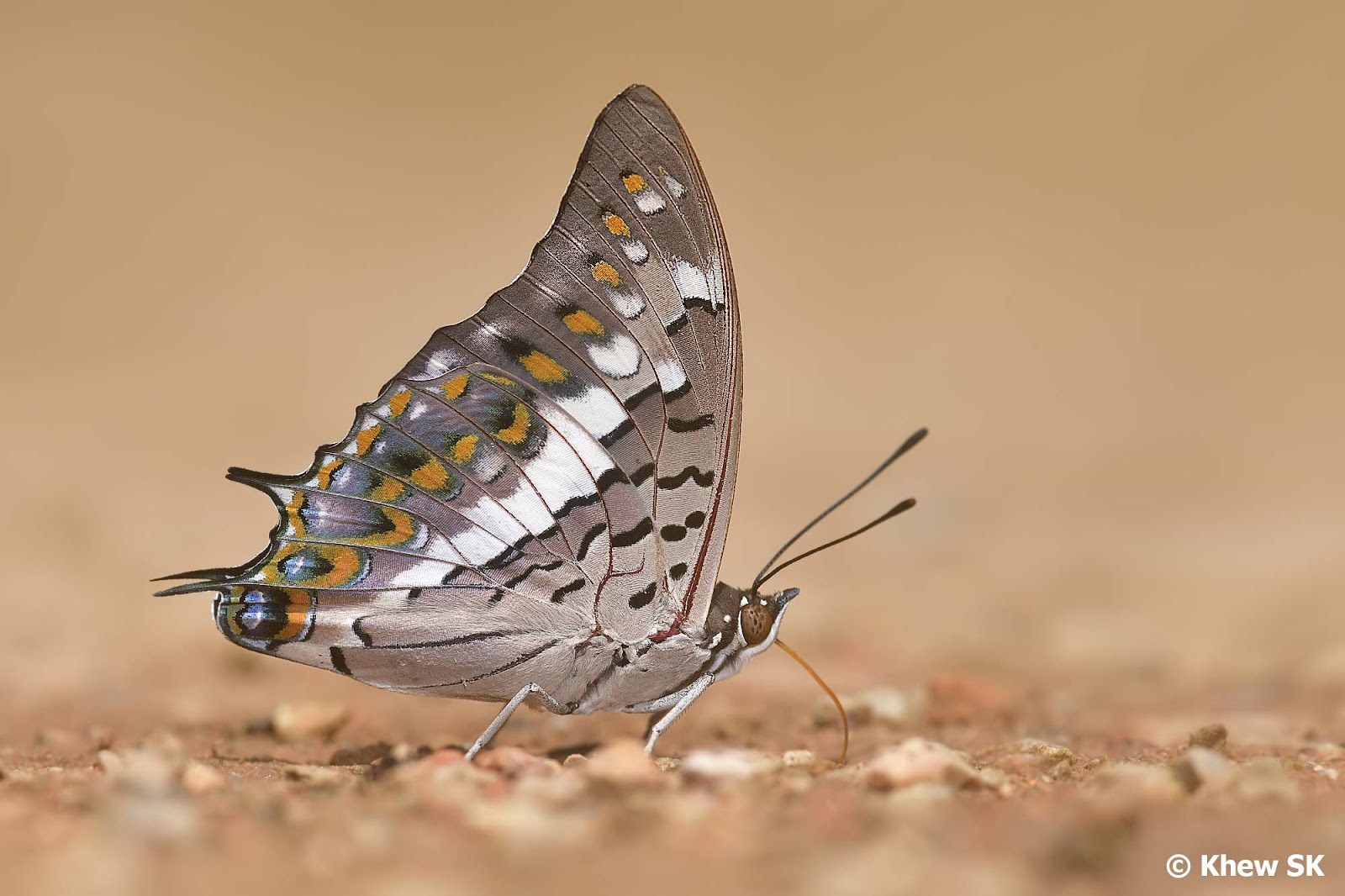


Puddling butterflies at Chiangdao Wildlife Sanctuary
Our first-time visitors, Jonathan, Mei Yee and Cheng Ai wasted no time in getting on with their hunting for butterflies. The usual Nawabs, Rajahs and numerous Lycaenids and Hesperiids kept everyone busy for rest of the morning. The weather was quite ideal - hot and sunny for the rest of the day.

Antonio supervising the photographers at one of the trails


In the early afternoon, Antonio brought us up to a higher elevation along the winding road up Doi Chiangdao to a location where we used to encounter some Satyrinae. We managed to get our fill of "pluses" at this location. I also observed that the flowering Bidens alba/pilosa were back with a vengeance and were useful in attracting many species of butterflies. They were not as widespread on my last trip where the White Weed (Ageratum conyzoides) was the more prevalent roadside wild flower.


Back to the carpark again the late evening saw a few new 'targets' to shoot, but the weather was getting abit overcast and we could hear thunder in the distance. However, it didn't rain and we finished up for the day at about 4:30pm and set out for the journey back to Chiangmai. Dinner was at our favourite Japanese restaurant which is located just 5 minutes walk from the hotel.
Day 2 : Doi Suthep/Doi Pui


The forested area near the Wean Bua Ban Pha Ngoep waterfall and a group shot of ButterflyCircle members
The next morning, we had a leisurely breakfast as our destination was Doi Suthep, a location that was no more than 20 minutes drive from our hotel (depending on the traffic!). As with my previous trips, we stopped at the Wang Bua Ban Pha Ngoep waterfall area. We scoured the area for butterflies, but sadly the diversity of species was disappointingly low this season, although the usual 'resident' species were still around.


The Doi Pui Viewpoint and the hilltop clearing where we found some butterflies
We headed up to Doi Pui Viewpoint as our 2nd checkpoint for the day. This small "hilltopping" area was quite good for some Lycaenids in the past, and this is a regular waypoint that we checked out in our past visits to Doi Suthep and Doi Pui.


A little further uphill, we stopped at the the San Ku temple ruins. Other than a few skippers and Satyrinae, our target species was a no-show, as the overcast weather did not provide the conducive environment for its appearance. Nevertheless, this area is always a good stopover point. We moved back to the Doi Pui viewpoint and ended the day after chasing a peskily skittish Ananta Yellow Sailor (Neptis ananta learmondi).
Day 3 : Chiangdao


Back to Chiangdao Wildlife Sanctuary on Day #3
The next morning, it was back to Chiangdao Wildlife Sanctuary again, as we wanted to make the most of our entry ticket which was valid for 3 days per 200 Baht. Back at the puddling ground, most of the same species that we encountered two days ago were still around, with a few new additions that made their appearance on this relatively cloudy day.


More puddling butterflies!
As we were at the location slightly earlier, there were more species flying amongst the Bidens flowers along the roadside, though shooting along the road has its disadvantages as the regular stream of vehicles going up and down the road made it irritatingly challenging to shoot properly at times.


Throughout the day, it was more of trying to get better shots of the species that we had shot before, and looking for some new ones. All in all, the famous Chiangdao car park did not disappoint,despite the lower butterfly count, as there was always something interesting to shoot.
Day 4 : Mae Phaeng, Phrao District


A new location recommended by our favourite butterfly host, Antonio
Our original plan was to go up Doi Inthanon for some montane species, but the weather forecast predicted rains by mid-morning. Rather than take the risk of encountering bad weather, Antonio suggested another location towards the east of Chiangmai. We decided to take his advice and head out to this new location.


The shooting environment that kept us busy for a whole day!
Driving towards Chiangdao, but then veering eastwards after a major junction, we headed towards the Phrao District and went off-road around the Mae Phaeng area. This dirt track led us a few kilometers uphill to just about 800 m ASL and we stopped along the track to look for butterflies.


A sample of the butterflies that we encountered
We spent an entire day in that area, walking up and down the dirt track and looking for puddling butterflies. The appearance of the Dawnas Royal (or what we call Golden Royal in Singapore), gave us some excitement. The subspecies in arooni which is different from the one found in Malaysia and Singapore. But it returned time and again to taunt us before we had our fill of it.

Orange Oakleaf was in season and we saw them everywhere!
We encountered quite a number of similar species as in Chiangdao at this location. The Orange Oakleaf (Kallima inachus siamensis) seemed to be in season in many locations that we visited over the past 4 days, and the variability of the individuals that we encountered was quite amazing. It appeared that each individual was unique in its wing patterns!

Yellows feeding frenzy with a large intruder in the background
Our last dinner for this trip was at at a nearby Italian restaurant recommended by Antonio. We thought that since an Italian suggested this, the food must come highly recommended! And we weren't disappointed. The complimentary caramel vodka that the owner of the restaurant threw in to end the evening sweetened the experience!

A final group shot with our good friend and butterfly guide, Antonio
And so ended a short 4-day shootout and my 6th trip to Chiangmai since 2014. It was always fun to check out the butterflies in north Thailand, and a pleasure to have Antonio as our butterfly guide on all my trips there. For our butterfly enthusiasts out there, do contact Antonio if you are keen to visit Thailand for your butterflying trips. As an avid butterfly photographer himself, he will bring you to the best locations for butterflies in Thailand!
Text by Khew SK : Photos by Antonio Giudici, Khew SK, Lim CA, Loh MY and Jonathan Soong


Back to the carpark again the late evening saw a few new 'targets' to shoot, but the weather was getting abit overcast and we could hear thunder in the distance. However, it didn't rain and we finished up for the day at about 4:30pm and set out for the journey back to Chiangmai. Dinner was at our favourite Japanese restaurant which is located just 5 minutes walk from the hotel.
Day 2 : Doi Suthep/Doi Pui


The forested area near the Wean Bua Ban Pha Ngoep waterfall and a group shot of ButterflyCircle members
The next morning, we had a leisurely breakfast as our destination was Doi Suthep, a location that was no more than 20 minutes drive from our hotel (depending on the traffic!). As with my previous trips, we stopped at the Wang Bua Ban Pha Ngoep waterfall area. We scoured the area for butterflies, but sadly the diversity of species was disappointingly low this season, although the usual 'resident' species were still around.


The Doi Pui Viewpoint and the hilltop clearing where we found some butterflies
We headed up to Doi Pui Viewpoint as our 2nd checkpoint for the day. This small "hilltopping" area was quite good for some Lycaenids in the past, and this is a regular waypoint that we checked out in our past visits to Doi Suthep and Doi Pui.


A little further uphill, we stopped at the the San Ku temple ruins. Other than a few skippers and Satyrinae, our target species was a no-show, as the overcast weather did not provide the conducive environment for its appearance. Nevertheless, this area is always a good stopover point. We moved back to the Doi Pui viewpoint and ended the day after chasing a peskily skittish Ananta Yellow Sailor (Neptis ananta learmondi).
Day 3 : Chiangdao


Back to Chiangdao Wildlife Sanctuary on Day #3
The next morning, it was back to Chiangdao Wildlife Sanctuary again, as we wanted to make the most of our entry ticket which was valid for 3 days per 200 Baht. Back at the puddling ground, most of the same species that we encountered two days ago were still around, with a few new additions that made their appearance on this relatively cloudy day.


More puddling butterflies!
As we were at the location slightly earlier, there were more species flying amongst the Bidens flowers along the roadside, though shooting along the road has its disadvantages as the regular stream of vehicles going up and down the road made it irritatingly challenging to shoot properly at times.


Throughout the day, it was more of trying to get better shots of the species that we had shot before, and looking for some new ones. All in all, the famous Chiangdao car park did not disappoint,despite the lower butterfly count, as there was always something interesting to shoot.
Day 4 : Mae Phaeng, Phrao District


A new location recommended by our favourite butterfly host, Antonio
Our original plan was to go up Doi Inthanon for some montane species, but the weather forecast predicted rains by mid-morning. Rather than take the risk of encountering bad weather, Antonio suggested another location towards the east of Chiangmai. We decided to take his advice and head out to this new location.


The shooting environment that kept us busy for a whole day!
Driving towards Chiangdao, but then veering eastwards after a major junction, we headed towards the Phrao District and went off-road around the Mae Phaeng area. This dirt track led us a few kilometers uphill to just about 800 m ASL and we stopped along the track to look for butterflies.


A sample of the butterflies that we encountered
We spent an entire day in that area, walking up and down the dirt track and looking for puddling butterflies. The appearance of the Dawnas Royal (or what we call Golden Royal in Singapore), gave us some excitement. The subspecies in arooni which is different from the one found in Malaysia and Singapore. But it returned time and again to taunt us before we had our fill of it.
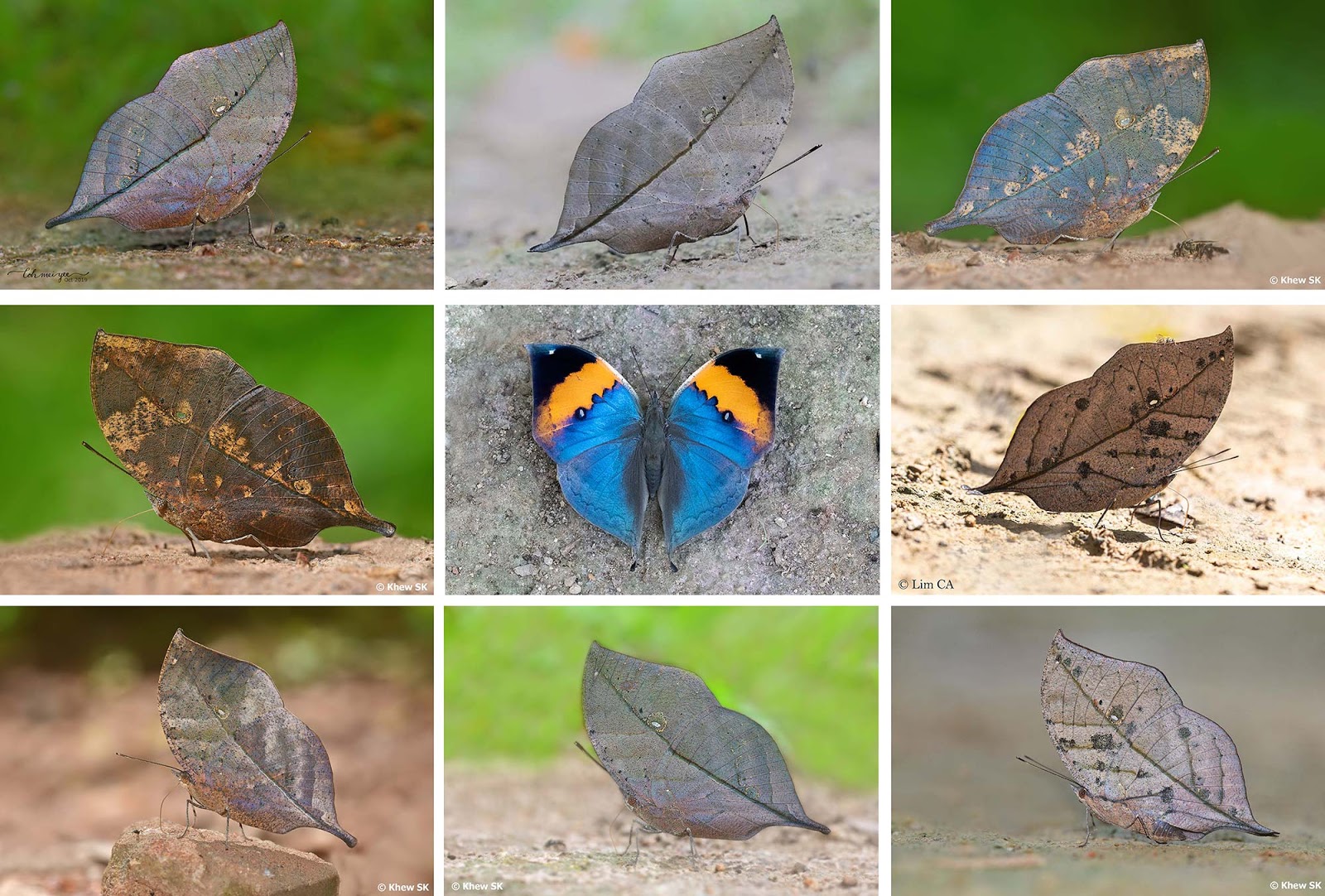
Orange Oakleaf was in season and we saw them everywhere!
We encountered quite a number of similar species as in Chiangdao at this location. The Orange Oakleaf (Kallima inachus siamensis) seemed to be in season in many locations that we visited over the past 4 days, and the variability of the individuals that we encountered was quite amazing. It appeared that each individual was unique in its wing patterns!

Yellows feeding frenzy with a large intruder in the background
Our last dinner for this trip was at at a nearby Italian restaurant recommended by Antonio. We thought that since an Italian suggested this, the food must come highly recommended! And we weren't disappointed. The complimentary caramel vodka that the owner of the restaurant threw in to end the evening sweetened the experience!

A final group shot with our good friend and butterfly guide, Antonio
And so ended a short 4-day shootout and my 6th trip to Chiangmai since 2014. It was always fun to check out the butterflies in north Thailand, and a pleasure to have Antonio as our butterfly guide on all my trips there. For our butterfly enthusiasts out there, do contact Antonio if you are keen to visit Thailand for your butterflying trips. As an avid butterfly photographer himself, he will bring you to the best locations for butterflies in Thailand!
Text by Khew SK : Photos by Antonio Giudici, Khew SK, Lim CA, Loh MY and Jonathan Soong


